
Capacity & Suitability
Capacity is 1000 liters, so it suits farms that aren’t tiny but also aren’t running at industrial scale yet.
Material & Construction
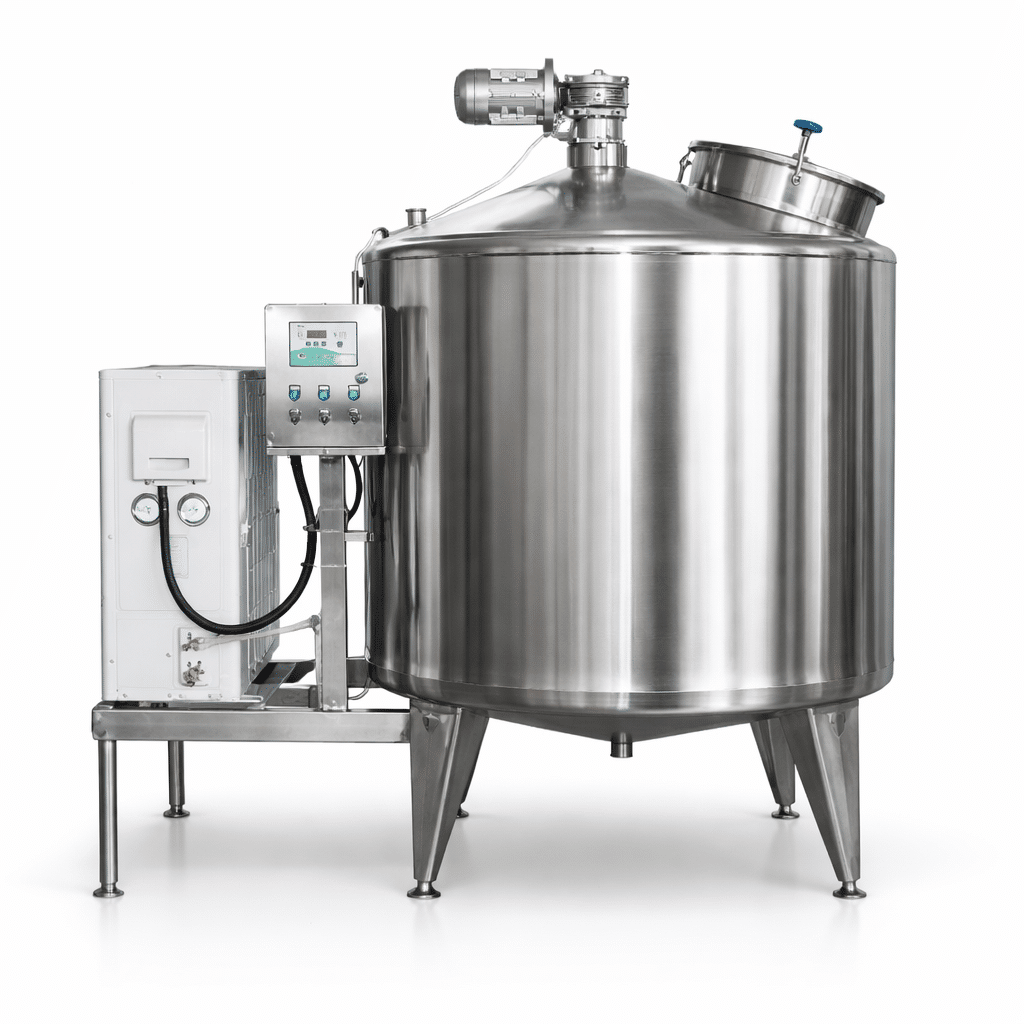
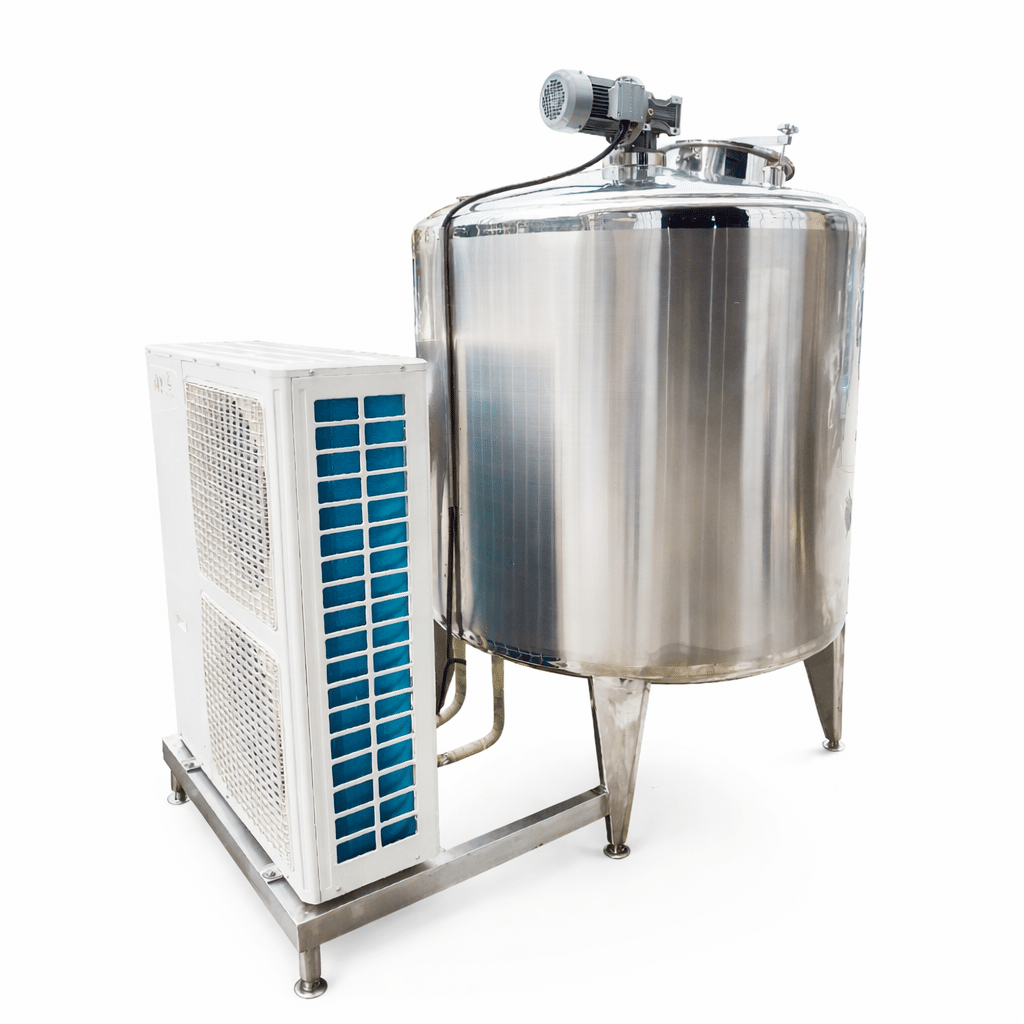
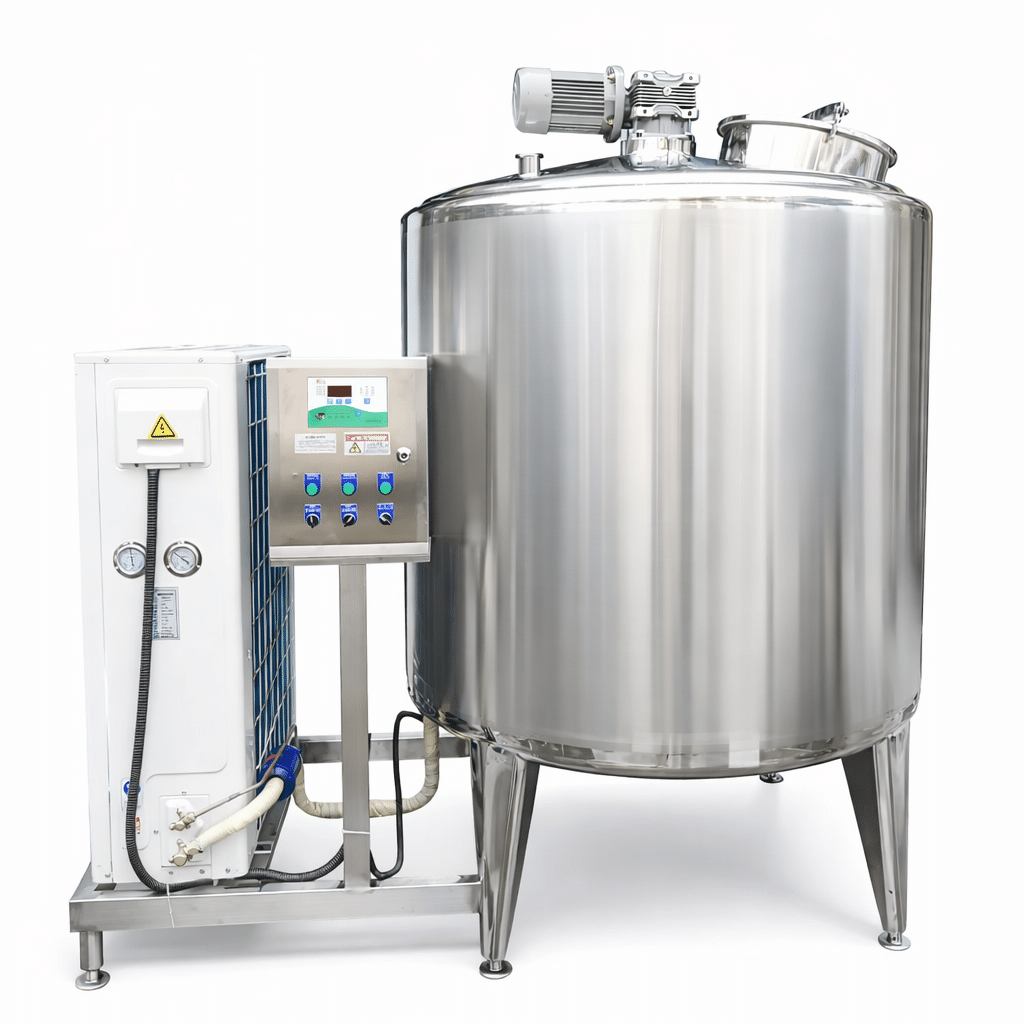
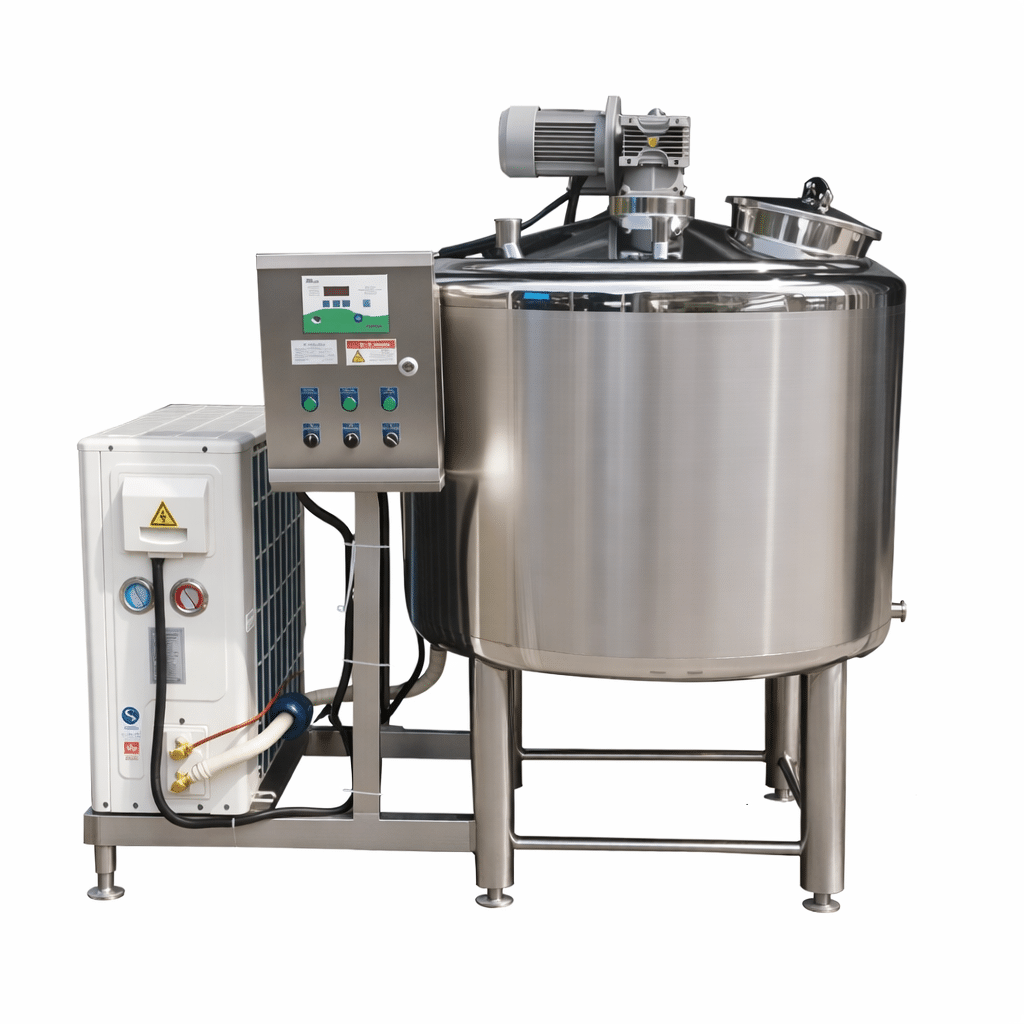
The body is made from SS304 food-grade stainless steel, which is standard for milk tanks and fairly easy to wash down after use. There’s PUF insulation around the tank to help hold the temperature, and the cooling system can be set up as direct expansion or ice bank depending on what you prefer and how your power supply is.
Control & Operation
On the front there’s a small control panel with a digital temperature display. You can see the current temperature and adjust the settings if needed. Inside, an automatic agitator runs at intervals so the milk doesn’t just sit still in one spot. That helps keep the temperature more even and reduces thick cream just forming on the top.
Power Supply
Power can be made for 220V or 380V, or other voltages if you tell us in advance.
Applications
The unit is mainly used in dairy farms, village collection centres, small processing plants and cooperatives that collect from nearby farmers. Most people choose this type because it’s a straightforward machine: not the cheapest thing you can buy, but it does the basic job – cool the milk, keep it cold, and doesn’t need complicated daily handling.
Cooling Performance & Installation
How fast it cools depends on the starting temperature and the weather, but in normal conditions bringing the milk down to around 4°C usually takes a couple of hours. It’s been used in hotter regions as well; the main thing is to install it in a place with some airflow and not right up against a wall or heat source.
Pricing Information
If you need a price, it will depend on a few choices: which cooling system you want, what voltage you use, and whether you need any changes like SS316 material or a specific compressor brand. With that information, we can work out a more exact quote rather than just giving a random number.